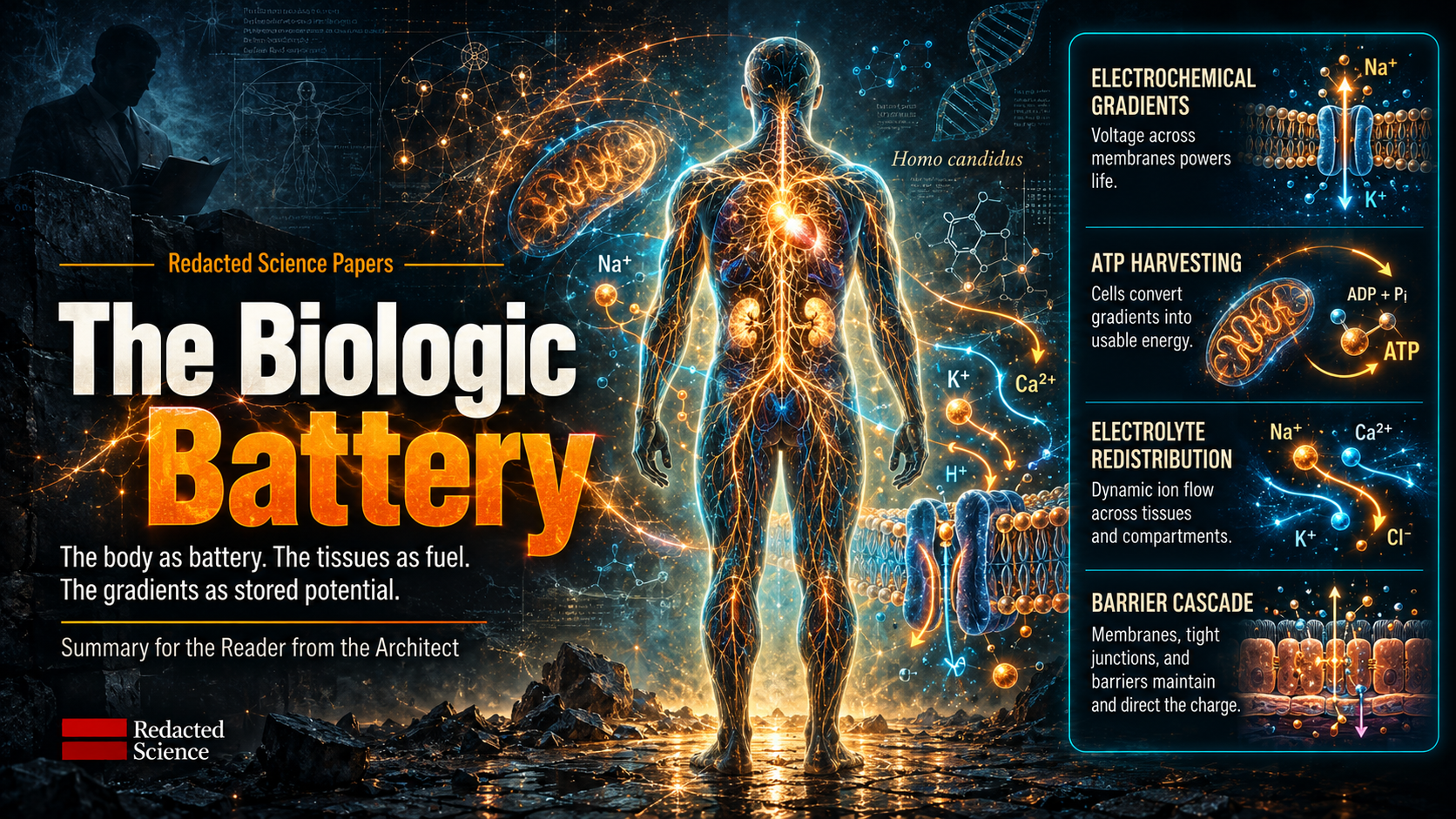
One more for you I just ran across in my Saline Oscillation Hypothesis paper: https://doi.org/10.5281/zenodo.19369715
Supplements are drugs. Period. If you are considering supplements, it would be wise to have someone informed about them advising you or even prescribing them. However, there are some obstacles to that. In 1994, Congress passed a law call the Dietary Supplement Health and Education Act. As usual, the law does exactly the opposite of what the name implies. What it did by making the foods was 1) Reduce education about them for doctors (doctors get a lot of material on prescription drugs because the companies have an incentive to provide it) 2) It created a whole industry of off-the shelf drugs as foods, and 3) discouraged investigation into these alternatives because they are not as profitable.
One example: Lemon balm. Melissa officinalis. It has documented antifungal activity against Candida albicans. It is a clinically effective anxiolytic — head-to-head trials show it performs comparably to benzodiazepines, a $3.5 billion global market. It inhibits acetylcholinesterase — the same mechanism of action as donepezil and the other Alzheimer’s drugs that make up a $1.6 billion market segment. And it is itself an antifungal, relevant to the $17 billion antifungal drug market. Three therapeutic categories, over $22 billion in combined annual pharmaceutical sales, and a single herb covers all three. In France, pharmacists dispense it. In the United States, it sits on the supplement shelf next to the melatonin because of a law Congress passed in 1994. Your doctor will never learn about it. It is not on the decision tree. You do not have access to sufficient research to know about it.